Living “sent”
“Also I heard the voice of the Lord, saying: “Whom shall I send, And who will go for Us?” Then I said, “Here am I! Send me.”” (Isaiah 6:8, NKJV)
One of my favorite Old Testament passages is the prophet Isaiah’s vision of the Lord high and lifted up in Isaiah 6. After the death of King Uzziah, Isaiah sees the Lord high and lifted up on his throne. His first response is contrition because he recognized he was a sinner standing before a Holy God. After the Lord assures him that his sin is forgiven and his iniquity is taken away (the foundation of all service to God), the Lord asks Isaiah a question: “Who shall I send? Who will go?” Isaiah’s response is so challenging for us all: “Here am I. Send me!”
I have no idea where it came from, but somehow the idea has become embedded in American Christianity that missionaries, evangelists, and pastors are those who are sent. Certainly, part of those particular callings involves being sent by the Lord to the places He leads us to serve. However, I believe that scripture teaches that every Christian is sent out by the Lord. He has a plan and a purpose for every one of His children.
“For by grace you have been saved through faith, and that not of yourselves; it is the gift of God, not of works, lest anyone should boast. For we are His workmanship, created in Christ Jesus for good works, which God prepared beforehand that we should walk in them.” (Ephesians 2:8–10, NKJV)
God’s plan for every Christian is that we walk in the good works that He has prepared for us to do. Think about that. In a very real sense, every Christian is sent. We are sent out into the world to do the good works that He has prepared for us and thereby bring glory to Him. That’s why I say every Christian should “live sent”, meaning that we should view our everyday lives as opportunities to do good work for our Savior. This Monday, why don’t you pray and ask the Lord to show you where and how you can bring glory to Him in even the most trivial tasks of life? Live sent.
How do you witness to someone of another faith or no faith?
As nearly every community in America grows more diverse, it becomes increasingly important to get comfortable sharing Christ with people of another faith or no faith at all. For those of us who grew up in the Bible belt, that can be a daunting task. Some time back, I shared a message with our high schoolers on this subject. Here are the highlights of it. May we all share Christ with someone this week!
“How Do I Witness to a World that Believes Everything?”
Acts 17:16-31
Years ago, I became concerned about a friend of mine because I knew his family didn’t go to church and I was afraid that he was not a Christian. One day I talked to him about it. Do you know what he said? “I don’t believe all that stuff.” “How do you know the Bible is really true?” “How do you know that your religion is the right one?” “I just take some of your religion and some of another religion and make my own religion.” AND I HAD NO IDEA WHAT TO SAY!
That conversation with my friend was my first experience with a world that believes everything. I have had many since. Have you noticed that more and more people say things just like my friend said? How would you respond if you had someone say to you, “I don’t believe the Bible. I believe the Book of Mormon.”How can we tell the world if the world doesn’t believe? The world does believe. It just believes all kind of stuff – mostly the wrong stuff.
If you want to be a witness……
1) Be informed about the diversity of our world (v. 16-20)
Did you notice v. 16? It says that the city was given over to idols. Let me read you a description of this…
Athens was filled with examples of artistic beauty, particularly its statues of the Greek gods and the architectural magnificence of its temples. Paul, however, was deeply troubled by the idolatry that the art represented
Some of Athens’s most prominent features were its numerous pagan temples. The great temple to Athena (the Parthenon), the Erechtheion (dedicated to multiple deities), and the temple to the goddess Roma and the emperor Augustus stood atop the acropolis overlooking the city. Many other pagan sacred sites have also been found, confirming Petronius’s satirical assertion that it was easier to find a god than a man in Athens.
From the ESV Study Bible Commentary on the verse
It was easier to find a god than a man. THAT is religious diversity, my friends. That is the world that Paul was speaking to. Like Paul, we live in a world today that has increasing ethnic and religious diversity…
- More and more people do not believe (other religions/no religion)
Let me share with you two important numbers that you need to know:
A.) The number of people in America who identify themselves with religions other than Christianity and Judaism has DOUBLED in the last 20 years (Since I graduated from high school)
B) The number of people in America who tell surveyors that they have no religion at all has DOUBLED in the last 20 years.
- More and more people have never heard
I could tell you about whole countries in our world where very few if any people have ever heard the gospel. However, did you know that there is a growing number of people right here in Alabama who have never heard the gospel? Just the other day, I talked with a man who lived within a couple of miles of our church, but who had never heard about Jesus and the cross. If you don’t remember anything else I have shared, don’t forget this: DON’T ASSUME ANYONE HAS HEARD THE GOSPEL. Make sure by sharing it with them.
2) Find a way to connect where they are (v. 22-23)
You don’t get anywhere by just condemning people. I once knew of a young man who attempted to witness to a non-believer that he had met while in college. The conversation started out this way: “How does it feel to be going to hell?” Now the person who did that – they had their theology correct. If the person did not believe in the Lord Jesus Christ, they were on their way to hell. However, he approached it all wrong. You can go about the right thing the wrong way. The Apostle Paul does a good job in these verses of connecting where the people were. Start out with where they are in their understanding.
3) Focus on Creation (v. 24)
Why is it important to go back to creation? Because anybody with any sense knows that this world did not get here by accident. There are truly not many people who believe that this planet and the people on it just happened by chance. Not many at all. Most people believe that there is a creator because they inherently know that all of those could not have just happened by accident. How does this help us tell the world? I once witnessed to a young man who told me that he was agnostic, but I took him back to creation and he believed that there had to be a creator. “Wouldn’t it make sense for that creator to reveal Himself?” That led me to Jesus and the Bible.
4) Focus on God’s authority (v. 25-26, 30-31)
Do you know why some people just cannot open their mind up to anything but the idea of evolution and the fact that there is no God? Because to believe there is a God in Heaven who made the world would mean that there must be some rules in this universe.
5) Focus on the Resurrection of Christ (v. 31)
6) Always share Hope (v. 30)
“…should repent” They have an opportunity to believe
Always remember….
· Be unashamed (v. 22)
· Expect opposition (v. 32a)
· Be confident in the Gospel’s power (v. 32b)
Don’t shy away from sharing with someone of another faith or no faith. God will use you to build bridges into their life and, if you approach them respectfully, you will gain a hearing for the gospel of Christ!
An Acts 11:24 man
One of my favorite “less well known” Christians in the New Testament is Barnabas. He is rightly known as the great encourager. In Acts 11, word reaches the mother church in Jerusalem about what God is doing in the church at Antioch. The leaders of the Jerusalem church decide to send Barnabas to Antioch in order to get a first hand report. The verse below describes what Barnabas did when he arrived…
“Then when he arrived and witnessed the grace of God, he rejoiced and began to encourage them all with resolute heart to remain true to the Lord;” (Acts 11:23, NASB95)
Yes, Barnabas was truly a “son of encouragement” to many believers. However, what really stands out to me about Barnabas is how he is described in the very next verse…
“for he was a good man, and full of the Holy Spirit and of faith. And considerable numbers were brought to the Lord.” (Acts 11:24, NASB95)
The reason Barnabas was able to be such an encourager is because he was that kind of man. The truth is that everyone who is in leadership leads from who they are, not their position on an organizational chart. People don’t follow positions; they follow people. Barnabas was the type of leader that people followed because he was an Acts 11:24 man.
Occasionally, someone will ask me how they can pray for me. Pray that I will always be an Acts 11:24 man.
The little church that could
This past week our family spent the week along with 24 other members of our church on a mission trip in the Williamsburg, Kentucky area. As usual on a mission trip, I found myself immeasurably blessed by the folks that we went there to help. Each evening, our team helped Wolf Creek Baptist Church conduct Vacation Bible School. This church’s story is truly “a God thing” that blessed me and I wanted to share it with my readers.
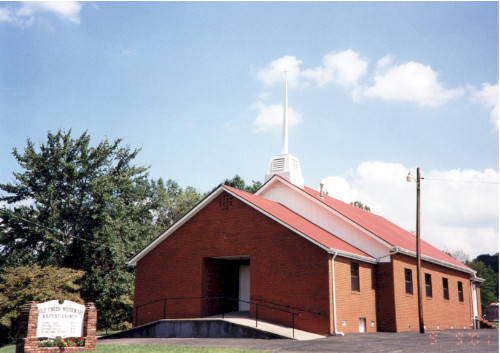
Wolf Creek Baptist Church is a 202 year old church (not a typo) in an extremely poor, rural community about seven miles outside of Williamsburg. This part of the country sees the effects of generations of poverty, the breakdown of the family, abuse, drugs, and a host of other ills. A number of years ago, Wolf Creek Baptist Church had only a handful of faithful attenders and was making little impact in its community. Then Pastor John Justice had a vision. The Lord began to stir his heart to lead the church to minister to the children of the area. According to Pastor Justice, he saw children growing up in generational cycles of spiritual lostness, poverty, neglect, and pain. According to members of Wolf Creek, Pastor Justice told the church, “If we don’t do something about it with the kids, nothing will ever change.” That simple vision from the Lord was the beginning of great things. With few people, little to no money, and an old church van, Wolf Creek stepped out on faith and began its journey to make a difference.
Today, Wolf Creek has between 75-100 children and teenagers in attendance EACH SERVICE – Sunday morning, Sunday evening, and Wednesday evening. Very few of those kids are brought by their parents. Wolf Creek members use four vans to go get them and then take them home. These kids, many of whom are growing up in situations that are heartbreaking, are loved unconditionally, taught the Word of God, and told of the difference the Lord Jesus can make in their lives. Oh yes, because many of the kids do not get adequate food at home, the church FEEDS THEM EACH SERVICE. That’s right. Wolf Creek feeds 75-100 children and teenagers every Sunday morning, Sunday evening, and Wednesday evening. The members of Wolf Creek say that they have to do that because meeting their physical needs must happen in order to meet their spiritual needs. Wolf Creek consistently sees as many as forty of these kids come to faith in Christ each year. In fact, a couple of years ago, they were #10 in the entire Kentucky Baptist Convention in baptisms.
All of this ministry is carried out by a core of group of less than 30 adults who attend the church regularly. The bulk of the work is done by six or seven families – week in and week out. This is one reason why Whitesburg goes up there for Vacation Bible School each year. It gives these faithful families a welcome break from having to carry the whole load. In addition to this small group of faithful members, Wolf Creek’s budget is small as well: $600 per week ($31,200 per year). The church rarely has a month when it meets its budget, but somehow its few bills get paid and the ministry is funded for another month. “When the money runs out and we don’t know what we are going to do, God provides,” is how one church leader described it to me.
The truth is that I went to be a blessing to Wolf Creek, but I was far more blessed to get to know them. In fact, I was downright convicted and challenged by spending time with that little church. Wolf Creek has an old building that is totally inadequate for them in every way. They have few leaders and little money. They minister to children and families who live in circumstances that in many cases are almost unbelievable. Nothing they do is easy. Every single thing requires work.
Yet, I found the people of Wolf Creek Baptist Church to be extremely positive. All week long I kept hearing phrases such as, “God is at work” and “It’s His ministry not ours.” They were certainly grateful for the help, but they were eager to share what God was doing among them! They steadfastly believe that one day God will provide a new building for them, and they aren’t discouraged at all that after two years the building fund only has $16,000. God provides. They are generous – even though they have very little. They insisted on presenting our mission team with a gift. One more amazing thing: Wolf Creek Baptist actually does mission trips. You read that right. This little church recently sent a mission team to help a church in another part of the country.
As we headed back to Alabama on Friday, I left there amazed and humbled. In all of my years of ministry, I have never seen a church that did more with less that I saw at Wolf Creek. They do it week in and week out with no pay, no recognition, and no sign that their work will get any easier. They do it by faith that God will provide, sometimes not knowing how the ministry will be funded for another month. Few people have ever heard of Wolf Creek Baptist, and far fewer have ever seen first hand what they do. However, I believe that Heaven knows exactly what is going on at Wolf Creek, and I believe that the Lord is smiling on it. Why do I say that? Because the Lord knows that Wolf Creek Baptist Church is rich in the things that really matter.
Come and be inspired!!

I would like to invite all readers of this blog to a very special event we are having at Whitesburg Baptist Church this weekend. It’s the renewal of
“I Love America.” The picture above was made at Wednesday evening’s dress rehearsal. Yes, that is a huge flag that has been built in our worship center with 100+ singers and hundreds of lights! It’s spectacular! “I Love America” was a yearly tradition for many years at Whitesburg and saw thousands of people attend each year. However, it’s been five full years since the last “I Love America” and it’s important to get the word out in every way possible.
Why don’t you come? Better yet, why don’t you come with many of your friends? Yes, “I Love America” is unapologetically patriotic and fun. However, there is also a serious call for repentance and revival in our nation. It is our desire that you will be inspired by the love of our country, but it is our foremost desire that you will be inspired to love Christ more deeply and become burdened to pray daily for revival in our nation. No tickets are required. Just come!
Friday, June 28 7:00 p.m.
Saturday, June 29 3:00 p.m.
Sunday, June 30 10:30 a.m.
Whitesburg Baptist Church
6806 Whitesburg Drive
Huntsville, Alabama 35802
Why every Christian should go on a mission trip
“And Jesus came up and spoke to them, saying, “All authority has been given to Me in heaven and on earth. “Go therefore and make disciples of all the nations, baptizing them in the name of the Father and the Son and the Holy Spirit, teaching them to observe all that I commanded you; and lo, I am with you always, even to the end of the age.”” (Matthew 28:18–20, NASB95)
The word “GO” in the Great Commission is unavoidable. Over the years I have observed various preachers and Bible teachers point out the Greek word translated “go” is poreuthentes. It is an aorist participle which some might translate “as you go” or “having gone.” They observe that what Jesus seems to have in mind here is a lifestyle of making disciples. We are to be making disciples all along the way in life. Certainly, it would be hypocritical to be a soul winner thousands of miles from home and yet never share Christ in the community where we live. However, we must be careful not to let this interpretation of the Great Commission minimize the importance of going beyond where we live and frequent. In fact, I consulted no less than 13 Greek lexicons and every single one of them pointed out that poreuthentes refers to travel. Yes, we are absolutely supposed to make disciples at home, but we are also to travel and make them as well! It’s not “either or” but rather “both and.”
It is my conviction that every Christian who is physically able should go on some type of mission trip. Please allow me to share with you several reasons why I feel this way…
1) Going on a mission trip shows that you desire to obey the Lord. The Lord has said to go, and actually going shows that you take God at His word and His command.
2) Going on a mission trip gets us out of our routine and our comfort zone. There is power in getting away and solely concentrating on doing something for the Lord Jesus. We have so many distractions and pulls on our time during our “normal” life that living on mission for Christ can get crowded out. Going on a mission trip reminds us of what it is like to focus and look for opportunities. Also, since we are out of our routine and away from home, we are more likely to stretch ourselves and try new things. I have been on mission trips with people who had never made a visit or never worked with children before going on a mission trip. In fact, the one and only time in my life that I have ever done puppets was on a mission trip to Memphis years ago! Now THAT got me out of my comfort zone!
3) Going on a mission trip actually challenges us to do more at home. Years ago, I had a pastor friend who went on a mission trip and they were helping a mission church do Vacation Bible School. Since the mission church had few children, the mission team spent their days going door to door inviting children and families to come. As that pastor walked up to knock on yet another door, he said a startling realization came to him: “I had been the pastor of my church for twenty years and never once knocked on a door to invite kids to Vacation Bible School.” When that pastor arrived home from that mission trip, he led the church to make hundreds of contacts in advance of their own Vacation Bible School and the result was record attendance and record numbers of children coming to faith in Christ.
4) Going on a mission trip broadens our vision and enriches us. It is a wonderful experience to meet people from different cultures. It enriches us to make new friends and see new sites. Most of all, we are reminded that it’s a big world and there are many times more people who live outside the United States than who live in it. Our heart for the nations grows when we actually go to the nations.
5) Going on a mission trip grows us spiritually. You will pray more on a mission trip, guaranteed! You will feel more dependent on the Lord than normal, and that is a very good thing. In fact, some of the most spiritually enriching times of my life have come when I was away from home out of my comfort zone and God spoke to me. He had more of my attention.
Yes, going on a mission trip requires sacrifice. Depending on where you go, it can be expensive. At the very least, it will cost us time and energy to go on a mission trip. However, a mission trip is one of the greatest investments you will ever make. Isn’t it worth sacrificing to do something for our great Savior? Isn’t it worth sacrificing to be obedient? If you are able, step out on faith and GO. You’ll be glad you did!
No unconfessed sin
“Who may ascend into the hill of the Lord? And who may stand in His Holy place? He who has clean hands and a pure heart, who has not lifted up his soul to falsehood, and has not sworn deceitfully.” Psalm 24:3-4 (New American Standard Version)
“If we say that we have no sin, we are deceiving ourselves and the truth is not in us. If we confess our sins, He is faithful to forgive us our sins and to cleanse us from all unrighteousness.” 1 John 1:8-9 (New American Standard Version)
People who run businesses must diligently keep track of their inventory. May times businesses succeed or fail depending on what is or is not on their shelves. Our spiritual life is the same way, it will succeed or fail depending on what is on our shelves. How long has it been since you took inventory of your heart and life?
In the passage from Psalm 24, God’s Word makes it clear that we need to focus on Godly living (clean hands) and Godly longing (pure heart). Have you done things lately that you know a Christian should not do? Remember that ungodly living results from ungodly longings in our heart. If you have ungodly longings in your heart, it is probably because you have “lifted up your soul to falsehood.” Think about that.
The good news is that, even though every Christian still struggles with sin to some degree, there is forgiveness. 1 John 1:9 is a great comfort to the Christian who has sinned. Your fellowship and joy in God can be restored. However, that will not happen as long as you refuse to get honest about the sin in your own life. Take a few minutes and take inventory of your heart and life; then deal with what’s in there.
What might happen this Sunday if every member of our church determined in their heart to come to church with no unconfessed sin in their life?
He is always on my mind!
“I will praise the Lord who counsels me — even at night my conscience instructs me. I keep the Lord in mind always. Because He is at my right hand, I will not be shaken.” (Psalm 16:7–8, HCSB)
I read these words this morning in my Bible reading and prayer time. As I read them, I thought about all of the times that the Lord’s “still small voice” has spoken to my heart at night before I drifted off to sleep. Praise Him for the times that He has counseled me at night! In addition, verse 8 refers to the fact that the Lord is with us and that fact sustains us and helps us not be shaken with the circumstances of life.
However, the key to all of this is found right in the middle of these verses: “…I keep the Lord in mind always.” Most versions of the Bible say something like, “I have set the Lord before me always.” That translation does not mean that the Lord is subject to us; it means that we choose to focus on the Lord. That is why the HCSB states it the way it does. Don’t miss the point. David is saying here that the reason the Lord counsels him in the night and sustains him is because he keeps the Lord on his mind constantly. It’s amazing – the more we focus on Him the more we hear from Him!
I once read that someone famously asked Charles Spurgeon how long he prayed at a time. Spurgeon replied that he rarely prayed for very long at one time, but he tried to never go very long between praying. In other words, Spurgeon kept the Lord on his mind always. Certainly, all of us have lots of things on our minds. Our families, careers, financial obligations, and the mundane affairs of life such as haircuts and dry cleaning all combine to consume large hunks of our thought life. We must meet those obligations, no question. However, we must consciously choose to keep the Lord Jesus always on our mind, or else “life” will keep our minds off of Him.
Why don’t you take a few moments right now and focus on the Lord Jesus. Praise Him. Thank Him. Cry out to Him. Ask Him. Then, in a few minutes, do it again! Maybe you are in a place right now where you can openly and loudly praise Him, or maybe you are at work and the quiet meditation of the heart and mind is more appropriate. Either way, the key is the same: to keep Jesus always on your mind! If Jesus is on your mind, two things will happen. First of all, if Jesus is always on your mind, then you will hear from Him more often. Second, if Jesus is on your mind, He will come out of your mouth! You will be a witness for Him to others.
Let’s all determine to have the Lord Jesus on our mind far more in coming days!
Sowing and Reaping
For some reason, all this week, I have had a message on my heart that I shared last year during an evening service at Whitesburg. I want to share it with the readers of this blog. Below are the basic preaching notes that I used in this message…
“Sowing and Reaping”
Galatians 6:6-10
You’ve probably heard the expression “the laws of nature.” These are laws that operate the physical world we live in. For instance, there is the law of gravity. If it were not for the law of gravity, we would have had trouble getting to church tonight! Then there is law of nature that says when water is cooled to 32 degrees it freezes into ice. Laws of nature operate the world we live in.
Did you know that there are spiritual laws that operate in the spiritual realm. Perhaps the most famous one is the law of sowing and reaping given here in Galatians 6. Now, the Bible is using farming imagery here. Sowing refers to sowing seed – to planting seed. Reaping refers to the harvest. The time when the seed we have planted yields a crop. From this text, I want us to see four Biblical laws of sowing and reaping…
I. We reap WHAT we sow
Look at verse 7. Now this is really common sense. When I grew up, my family had forty acres and my grandfather would do a little farming on the side. And I learned very early on in my life that if you wanted to grow a field of potatoes, that you didn’t plant corn. If you want potatoes, you plant potatoes! If you want watermelons, then you go buy some watermelon seed and you sow watermelon seed and then you reap watermelons – not tomatoes. Whatever you put into the ground is what comes up – every time. It’s the law of the harvest. You reap what you sow.
““Do not judge, and you will not be judged. Do not condemn, and you will not be condemned. Forgive, and you will be forgiven. Give, and it will be given to you; a good measure—pressed down, shaken together, and running over—will be poured into your lap. For with the measure you use, it will be measured back to you.”” (Luke 6:37–38, HCSB)
This is true in all areas of life as well. People who sow seeds of anger what do they receive in return? Anger. If you sow seeds of dishonesty, what do you reap? Dishonesty. If you sow distrust, then distrust grows. However, there is a positive side to it as well. If you sow seeds of love – what grows up? Love. If you sow forgiveness, you reap forgiveness.
“Life is like a boomerang. Our thoughts, deeds and words return to us sooner or later, with astounding accuracy.”
-Grant M. Bright
Did you notice that it says, “God is not mocked…” You don’t outsmart God. You don’t fool God. It’s absolute. You are going to get what you have sown. It might look good on the outside. You might have everyone fooled. But you will not fool the Lord. That’s the idea. That’s a sobering thought. No smoke and mirrors. No spin. No excuses. There it is – you reap what you sow.
Now, there is good news in the law of the harvest: If we sow good seed, we reap good things. Listen, whatever you and I want to reap more of in our lives, then we should begin to sow more of it. Because the Bible says that we do reap what we sow. Now, I want us to see a second law of sowing and reaping…
II. We reap WHERE we sow
Look at v. 8 Here Paul makes a tremendous application to our spiritual lives. He says that we not only chose what we sow, but we choose where we sow. He says that we can choose to sow into our flesh or we can choose to sow to the Spirit. Now let’s think about that a minute.
Remember that in the New Testament, our flesh does not refer to our skin, but rather it refers to the seat of sin in our lives. Let’s think about so much of the popular entertainment in our world today. Most of it is simply sowing to the flesh.
I don’t have to do a lot of explanation there do I? Most popular television and movies, not all but most, cater to the base and sinful parts of the human experience. In addition, everything that sows to the flesh is not necessarily wrong. Entertainment and leisure are not wrong in and of themselves. For instance, I don’t believe there’s anything wrong with a good football game, but that is not a spiritual experience either. Nothing wrong with football in its place. Nothing wrong with a good movie – in its place. Nothing wrong with good food and good friends in their place. Our flesh needs food, fun, and friendship. So, don’t think that sowing to the flesh is ALL bad stuff. It’s not. However, because our flesh is the seat of sin in our lives, even something that is OK can become bad for us. Think about it. Nothing wrong with having fun with our friends, but if that is all we live for and all we do, then we won’t do anything productive and worthwhile. Nothing wrong with a good movie, but if all we do in our spare time is watch movies and never read our Bible or pray – then we’ve got a problem. If we sow to our flesh, we will get corruption.
My point is this. Just by living in this world, our flesh will get taken care of! Our flesh will be stimulated for good and bad plenty just by living in this world. If we want to grow as Christians, we have to CHOOSE to sow seeds in our spiritual field. That time of prayer and Bible reading that you start your day with – that’s sowing to the spirit. That music you listen to in your car that exalts the Lord Jesus – that’s sowing to the Spirit. Worshiping with other believers, that men’s prayer group, praying with your spouse before you go to bed, praying with your kids before you go to bed. Helping someone in need and telling them Jesus loves them. Sharing the gospel with someone. Those things are sowing to the spirit.
This is a very important principle here. We choose WHERE we sow. And every single day, we are either sowing to please our flesh or we are sowing to the spirit. Remember, this is the law of the harvest, so if we are struggling with our flesh – struggling with a particular sin – then do you know what we need to do? Sow to the spirit. Remember how the Bible said that we won’t fulfill the lust of the flesh?
“I say then, walk by the Spirit and you will not carry out the desire of the flesh.” (Galatians 5:16, HCSB)
So, how do we walk in the Spirit? We chose to sow to the spirit. Now, back to the farming analogy. When we planted corn, we not only reaped corn, but we reaped corn in the field where we planted it.
Listen, you have the harvest in the field where you sow your seed. No wonder so many Christian’s today come to church and say they don’t get much out of it. They’ve sown their seed all week long in the flesh’s field and then come to church for an hour on Sunday morning and expect to reap a spiritual harvest! It doesn’t work that way. We reap WHERE we sow in addition to what we sow.
Before we move on, let’s make sure we connect the dots here. The law of the harvest says that I reap what I sow where I sow. So, there is good news in that. If I want more love in my home, then what do I need to do? Sow love in my home. If I want integrity in the life of my children, then I sow integrity into their lives. If I want my church to be more friendly, then I sow friendliness in my church. If I want my Sunday school class to reach out, then I sow outreach in my Sunday school class. The Law of the harvest gives hope.
Now, I want us to see a third law of sowing and reaping…
III. We reap WHEN we sow
-Verse 9 teaches us this principle. Now, this does not mean that we will necessarily reap at the moment we sow, but we are assured that we eventually will reap. If we sow, we will reap eventually. Don’t ever forget that.
“Therefore, my dear brothers, be steadfast, immovable, always excelling in the Lord’s work, knowing that your labor in the Lord is not in vain.” (1 Corinthians 15:58, HCSB)
You know, we live in an age of instant, fast everything. Have you noticed that? Fast food, high-speed internet, express check-out. That’s why it’s hard for us to really let the impact of the scriptures sink in because the Bible was written in an agrarian society. They understood sowing and reaping because it was their livelihood year in and year out. Today, our idea of sowing and reaping is getting paid and going out to eat and then to Publix. It’s hard for us. American’s don’t do well with patiently waiting.
We are like a farmer who planted a field of corn one day and then quit farming two days later because he didn’t have a field of corn! Remember, v. 9 speaks of reaping in “due season.” When it’s time. When God is ready. Sometimes we don’t reap because it is not the season. Maybe you are in one of those seasons. Money is low and your blood pressure is high. Everything you do is hard. You are seeing no results. It feels like your prayers are not getting above the ceiling. KEEP SOWING. That’s what v. 9 says. Keep sowing and you can rest assured that the harvest will eventually come. On the other hand, seasons change and there are seasons of reaping in life. Ecclesiastes says that to everything there is a season! Have you ever had a season of reaping? I have.
IV. We reap IN WHOM we sow
V. 10 At first this almost seems out of place. Like it starts another section. And then one day it hit me. It’s like the Apostle Paul, after all of this talk about sowing and reaping, tells us to look around and find someone to sow into their lives. It’s not just about your life. Make a difference in someone else. Really, the longer I am in ministry, I learn that what truly lasts in the changed lives. What truly lasts is the difference that you make in the lives of others.
What am I sowing?
Where am I sowing?
In whom am I sowing?

